
Start with Goals
Start with Questions

Academe (where a weathered historian shares)
Educational Goals
What do I hope for my students? It rarely changes from semester to semester.
I hope my students learn both content and skills. This has been a perennial debate in my head since I started teaching as a TA in grad school: are we here to cram as much content into heads or teach skills that allow people to acquire content on their own in a discerning way? It is, of course, a balance of both in a history course.
I hope my students fall in love with wanting to know. Questioning is the cornerstone of building knowledge. We do not want knowledge to be shaky or unsteady and so the questioning has to be done in a discerning manner. What kind of question, how it is formulated and phrased, the type and degree of focus it allows, and quite simply whether it is an open-ended question are all important properties to learn to craft and manipulate so that the question(s) we ask help us rather than lead us in the wrong direction.
I hope my students come to esteem and respect the work they put in to their learning. Too often we all admire what another person has done and we miss or dismiss what we ourselves are capable of. Reading books and articles that convey tons of research (“tons” is obviously a technical term here) in polished prose not only provides the content but also models for the skills that we are trying to build. By doing — reading, researching, and writing — students learn to distinguish between high-quality and poor-quality argumentation, between high-quality and poor-quality use of evidence, between high-quality and poor-quality thinking. It takes time but we can learn to do what someone else has done.
In short, I hope my students learn to discern, distinguish, and judge. Below are the institutional learning outcomes for the class I am teaching this fall semester. They are not perfect because the verbs are not specific or measurable enough, and while I cannot change them for now, these fundamentals — to discern, distinguish, and judge — are all present and I can see how the readings I have chosen and the activities I have designed for the class contribute to both my own and the course’s goals.
Learning Outcomes for HIST 355
This course is designed to provide students with the opportunity to:
acquire an understanding of contemporary Europe and its problems in both the East and West;
gain awareness of how differences rooted in the past have affected Europeans today;
learn how to formulate an historical question and use historical thinking to illuminate a specific issue or problem current in Europe today;
understand how historical experiences have contributed to the origins and responses to a range of contemporary European problems and issues;
understand the European responses to cultural, political, and economic influences from beyond its borders.
With Critters, It’s Personal
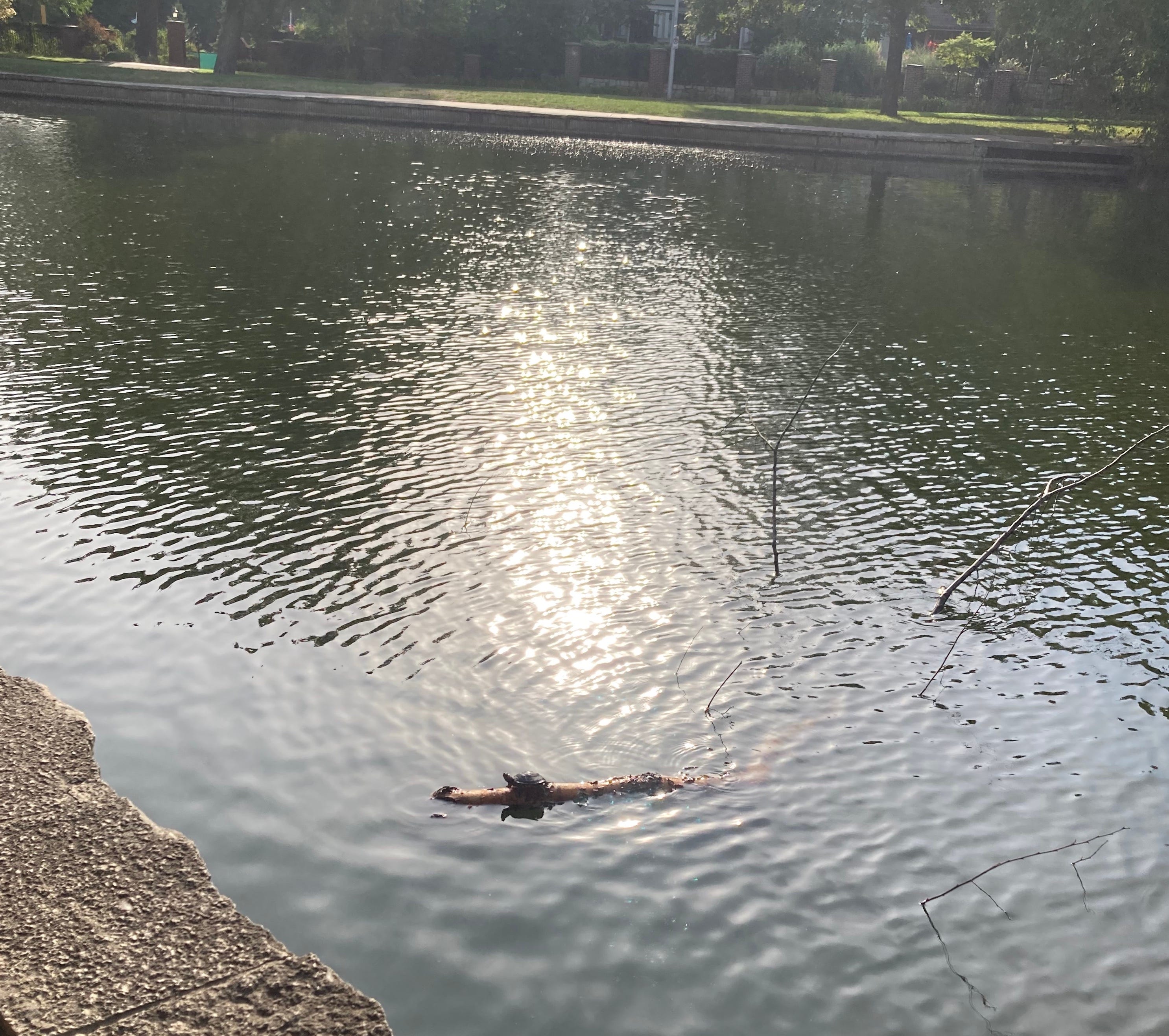
What do you see when you look at this picture?
What do you notice in this picture?
What jumps out at you from this picture?
How do the elements of this picture “speak” to each other?
What is going on in this picture?
How is this picture composed?
What message does this picture convey?
Which question helped you think differently and more clearly about the photo? What question would you ask about it?